
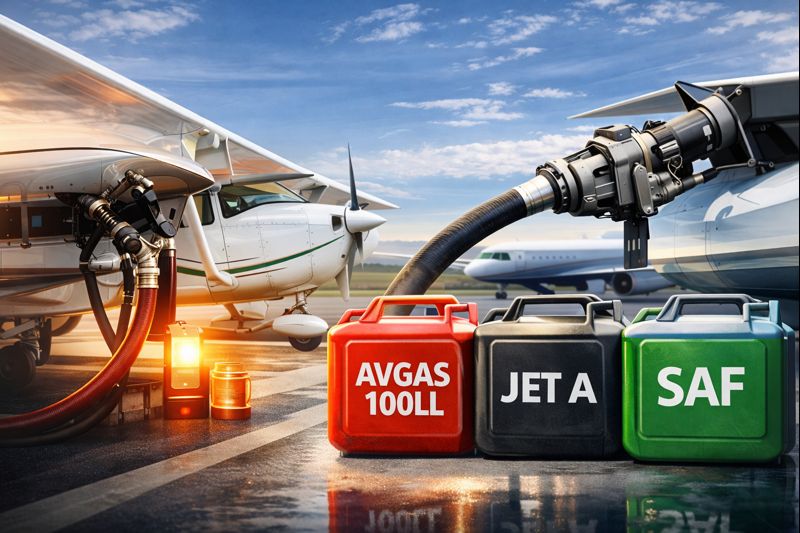
Choosing the correct fuel for your aircraft is one of the most critical decisions in aviation operations. The right fuel ensures engine performance, operational safety, regulatory compliance, and long-term reliability. The wrong fuel choice, however, can lead to severe mechanical damage, safety risks, and costly downtime.
This guide explains how to choose the right fuel for your aircraft, covering aircraft fuel types, engine compatibility, technical specifications, operational considerations, and evolving fuel supply needs across general aviation, training operations, and specialized facilities such as heliports.
Why Aircraft Fuel Selection Matters
Aircraft engines are designed to operate within strict fuel parameters. Unlike automotive fuels, aviation fuels must meet precise standards related to volatility, combustion stability, altitude performance, and contamination control.
Selecting the correct avgas aviation fuel or turbine fuel directly affects:
- Engine efficiency and longevity
- Aircraft performance in varying conditions
- Safety during takeoff, climb, and cruise
- Compliance with aviation regulations
Fuel selection should never be based on availability alone. It must always align with aircraft and engine requirements.
Understanding Aircraft Fuel Types
Before choosing fuel, it is important to understand the primary categories of aviation fuel.
Aviation Gasoline (Avgas)
Aviation gasoline is primarily used in piston-engine aircraft, which make up a large portion of general aviation and flight training fleets. Avgas is specially formulated to resist detonation at high power settings and varying altitudes.
Among avgas options, 100LL is the most widely used grade today.
Jet Fuel
Jet fuel is designed for turbine engines, including turboprops, turbojets, and helicopters with turbine powerplants. It has different combustion and lubrication properties than avgas and is not interchangeable.
Piston vs Turbine Engines: Fuel Compatibility
Fuel compatibility depends on engine design.
- Piston-engine aircraft require aviation gasoline and cannot safely operate on jet fuel.
- Turbine-engine aircraft are designed for jet fuel and do not use avgas.
Using the wrong fuel type can cause immediate engine failure or long-term damage. This is why fuel placards, aircraft manuals, and standardized fueling procedures are essential.
What Is 100LL Aviation Gasoline?
100LL (Low Lead) aviation gasoline is the most common piston-engine aircraft fuel in use today. The “100” refers to its octane rating, and “LL” indicates lower lead content compared to older formulations.
Avgas 100LL Technical Specification
Understanding the avgas 100ll technical specification helps operators appreciate why this fuel is critical for piston aircraft:
- High octane rating to prevent detonation
- Stable combustion across altitude changes
- Controlled volatility for cold and hot starts
- Additives to protect engine components
These specifications ensure reliable performance under demanding flight conditions.
Aviation Gasoline for Heliports and Specialized Operations
While many helicopters use turbine engines, some light helicopters operate on piston engines. These aircraft rely on aviation gasoline for heliports, particularly in training, private, and utility operations.
Fuel availability at heliports must meet the same quality standards as airports. Storage, handling, and delivery procedures are especially important due to space constraints and operational frequency.
Reliable fuel planning supports:
- Training schedules
- Emergency readiness
- Remote and urban heliport operations
Weight, Handling, and Fuel Planning Considerations
Fuel weight plays a critical role in aircraft performance. Aviation gasoline has different density and weight characteristics compared to jet fuel, affecting payload calculations and range planning.
Operators working with a 100ll weight aviation fuel supplier must consider:
- Fuel density variations
- Aircraft maximum takeoff weight limits
- Balance and center-of-gravity calculations
Accurate fuel data supports safe dispatch decisions and efficient flight planning.
Bulk Fuel Supply and Operational Efficiency
As flight operations scale, fuel logistics become increasingly important. Training organizations, fleet operators, and regional airports often rely on bulk delivery of avgas 100ll to maintain consistent supply and cost predictability.
Bulk fuel delivery supports:
- Reduced refueling interruptions
- Stable pricing structures
- Improved inventory management
- Higher operational efficiency
This approach is especially common in high-frequency training environments and remote aviation facilities.
Choosing the Right Fuel Supplier
Beyond fuel type, supply reliability matters. An experienced aviation fuel supplier understands quality control, compliance standards, and operational demands across different aviation sectors.
Professional aircraft fuel suppliers focus on:
- Fuel testing and contamination prevention
- Proper storage and handling
- Consistent delivery schedules
- Regulatory compliance
Fuel quality assurance is just as important as fuel selection itself.
Comparing Common Aviation Fuel Types
The table below helps clarify how different fuels are used across aircraft categories.
Aircraft Fuel Types and Applications
| Fuel Type | Primary Aircraft Use | Key Characteristics |
| Avgas 100LL | Piston-engine aircraft | High octane, stable combustion |
| Aviation Gasoline | Training & general aviation | Designed for altitude performance |
| Jet Fuel | Turbine engines | High energy density, low volatility |
| Sustainable Aviation Fuel | Emerging turbine use | Lower environmental impact |
This comparison helps operators quickly identify appropriate fuel choices based on aircraft type.
Safety, Compliance, and Fuel Handling
Aircraft fuel safety goes beyond selecting the correct type. Proper handling, storage, and testing are essential to prevent contamination and operational risks.
Best practices include:
- Routine fuel sampling
- Monitoring storage conditions
- Following approved fueling procedures
- Verifying fuel grades before refueling
Regulatory compliance ensures fuel quality remains consistent across all operating environments.
Future Trends in Aviation Fuel Selection
The future of aviation fuel includes innovation and sustainability. While piston aircraft continue to rely on avgas, research into alternative fuels and reduced-lead solutions is ongoing.
At the same time, operational efficiency and supply chain reliability remain top priorities for aviation operators worldwide.
Conclusion
Choosing the right fuel for your aircraft is a critical decision that directly affects safety, performance, and operational success. Whether operating piston-engine aircraft on avgas aviation fuel, supporting aviation gasoline for heliports, or managing bulk delivery of avgas 100ll, fuel selection must always align with aircraft specifications and operational needs.
By understanding avgas 100ll technical specifications, fuel weight considerations, and supply logistics, aircraft owners and operators can make informed decisions that support safe, efficient, and compliant flight operations.
Frequently Asked Questions (People Also Ask)
Q1: What fuel should I use for a piston-engine aircraft?
Piston-engine aircraft typically use aviation gasoline, most commonly 100LL, which is designed to meet high-octane and altitude performance requirements.
Q2: Is avgas the same as jet fuel?
No. Avgas and jet fuel have different chemical properties and are designed for different engine types. They are not interchangeable.
Q3: Can helicopters use aviation gasoline?
Some light helicopters with piston engines use aviation gasoline. However, most helicopters use turbine engines and require jet fuel.
Q4: Why is fuel quality important in aviation?
Fuel quality affects engine performance, safety, and reliability. Contaminated or incorrect fuel can cause serious mechanical issues or in-flight failures.
Q5: What are the benefits of bulk avgas delivery?
Bulk delivery of avgas 100LL ensures consistent fuel availability, stable pricing, improved logistics, and reduced operational disruptions for high-use facilities.

- How Flight Schools Can Win in 2026: Marketing Strategies That Fill Your Training Schedule - January 9, 2026
- How to Choose the Right Fuel for Your Aircraft - January 9, 2026
- Why Flight Training Schools Are Growing Rapidly Around the World - January 9, 2026

