
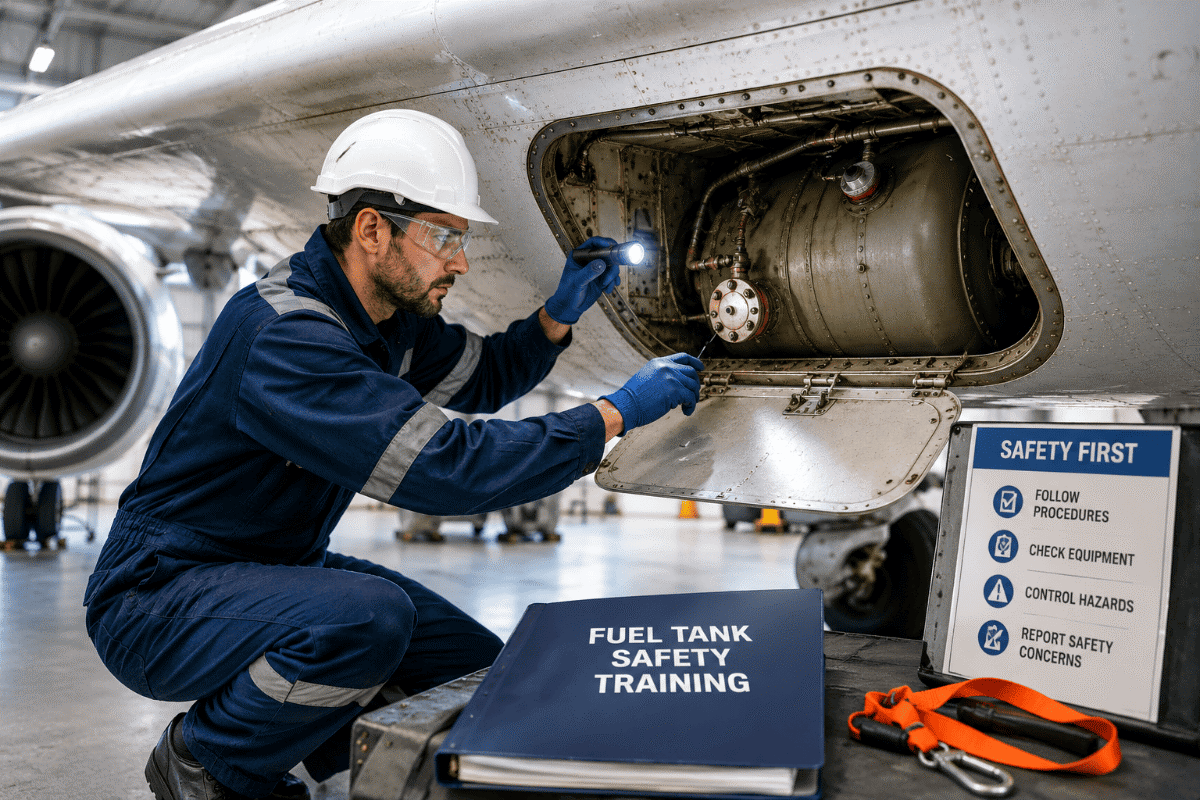
Aircraft maintenance depends heavily on precision, discipline, and awareness of risk. Among all technical responsibilities, fuel-related work demands some of the closest attention to detail. This is where Fuel Tank Safety Training becomes essential for aircraft engineers.
Fuel systems are sensitive, and even minor mistakes during inspection, handling, or servicing can lead to serious operational issues. Engineers are expected to follow strict procedures, maintain cleanliness, and ensure every step of fuel interaction is controlled and verified. Proper training strengthens these practices and supports safer aircraft operations across all maintenance environments.
Why Aircraft Engineer Safety Training Is Critical for Safe Operations
Good Aircraft engineer safety training teaches people how to work with focus and care. It helps them avoid rushed decisions, skipped checks, and unsafe habits.
Fuel work can feel routine after a while. That is when mistakes can happen. Training keeps the team alert and helps them do the job the safe way, every time.
Understanding Aircraft Fuel Systems and the Role of Aircraft Fuel Safety
Aircraft fuel moves through a system that must stay clean and well-managed. If the system has a problem, the engine can have a problem too.
That is why engineers need to know how the fuel system works. When they understand it well, they can spot trouble early and fix it before it gets worse.
Common Fuel Tank Risks Faced by Aircraft Engineers During Maintenance Work
There are several Common fuel tank risks faced by aircraft engineers during regular work. Water, dirt, loose debris, and microbial growth can all create trouble inside the tank.
These issues may seem small, but they can affect fuel quality. If ignored, they can lead to engine problems or flight delays.
Aviation Fuel Handling Procedures Used in Professional Maintenance Environments
Safe fuel work depends on clear rules. Aviation fuel handling procedures help keep people safe and fuel clean.
A few key habits matter a lot:
- Keep fire and sparks away from the fueling area
- Ground and bond equipment correctly
- Check tools and equipment before use
These steps help prevent spills, fire risk, and contamination.
Fuel Tank Hazard Prevention Techniques in Modern Aircraft Maintenance Practices
Fuel tank hazard prevention is about stopping problems before they start. That means using clean tools, checking seals, and looking for leaks or strange signs.
If something seems off, it should be checked right away. Waiting can turn a small issue into a much bigger one.
How Fuel Tank Safety Training Reduces Aviation Accidents and Operational Failures
So, how does fuel tank safety training reduce aviation accidents? It helps engineers catch fuel problems early and handle each step with care.
That lowers the chance of contamination, leaks, and wrong handling. It also helps prevent engine trouble and other safety issues before the aircraft goes back into service.
Importance of Working With Aviation Gasoline Distributors for Safe Fuel Supply Chains
Reliable aviation gasoline distributors help make sure the fuel arrives in good condition and on time. That matters because clean fuel is a big part of safe aircraft operation.
When the supply chain works well, engineers can trust the fuel they are using. That gives them one less thing to worry about.
Role of Aviation Fuel 100LL in Private Aircraft and Safety Considerations
Aviation fuel 100LL for private aircraft is widely used in piston-engine flying. It must be handled with care because private aircraft depend on stable fuel quality and good performance.
If the fuel is stored or moved the wrong way, problems can follow. That is why safety checks and careful handling are so important.
Aircraft Fuel Inspection, Monitoring, and Compliance Standards for Engineers
Fuel checks should always be done with care. Engineers need to look for leaks, dirt, strange smells, or anything else that does not seem right.
Regular checks help keep Aircraft fuel systems safe and ready. They also support compliance, which means the work meets safety rules and industry standards.
Best Practices for Long-Term Fuel Tank Safety in Aviation Engineering Operations
A few simple habits can make a big difference over time:
- Inspect fuel tanks on a regular schedule
- Keep work areas clean and organized
- Report unusual fuel conditions right away
These steps help keep the aircraft safe and reduce avoidable problems.
Strengthen Fuel Safety Standards in Aviation Operations
Strong maintenance practices always begin with awareness and proper training. When engineers are equipped with the right knowledge, the risk linked with fuel systems reduces significantly, and operational safety improves across the board.
Implementing structured Fuel Tank Safety Training programs helps aviation teams handle fuel systems with greater confidence, accuracy, and consistency. It also supports long-term safety standards in both commercial and private aviation environments.
To improve fuel safety readiness and support better operational control, Aviation Fuel provides guidance and solutions that help aviation teams maintain safer and more reliable fuel handling practices across daily operations.
Frequently Asked Questions
Q1: Why is fuel tank safety training important for aircraft engineers?
It helps engineers work safely around fuel, avoid contamination, and reduce the chance of maintenance mistakes that can affect flight safety.
Q2: What are the dangers of working inside an aircraft fuel tank?
The main risks include fumes, low visibility, contamination, slips, and exposure to unsafe conditions if proper safety steps are missed.
Q3: How often should aircraft engineers complete fuel tank safety training?
They should complete it regularly, especially during refresher cycles, role changes, or when new fuel procedures and safety rules are introduced.
Q4: What safety procedures are followed during aircraft fuel tank maintenance?
Engineers follow grounding, bonding, clean handling, careful inspection, and strict control of ignition sources during maintenance work.
Q5: Can fuel tank maintenance errors affect flight safety?
Yes. Even a small mistake can lead to contamination, leaks, or fuel system problems that may affect aircraft performance and safety.

- 100 Octane Aviation Fuel: A Complete Guide to Performance, Applications, and Reliable Supply - July 10, 2026
- How Fuel Prices Are Affecting Aviation in 2026 - June 30, 2026
- What’s the SHELF LIFE of Avgas? - June 18, 2026

