
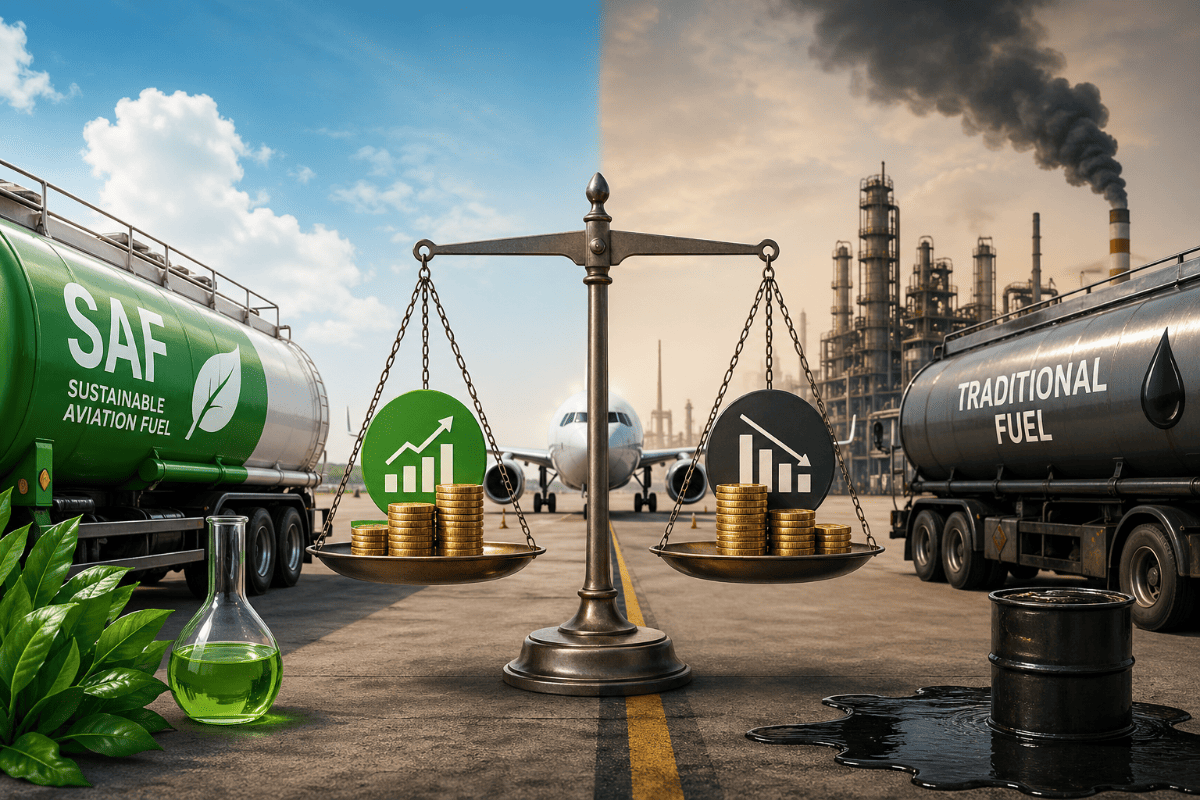
Air travel depends on fuel that is always ready and safe to use. Traditional jet fuel has been the main fuel for aircraft for many years. It helps planes fly smoothly every day. Now, a cleaner fuel called SAF is also used in some flights. It is made from natural materials and helps reduce pollution. Both fuels are important for aviation, but they are different in many ways. The question of whether SAF can replace conventional aviation fuel completely helps explain how the future of aircraft fuel may change.
What is SAF and Traditional Jet Fuel? (Sustainable Aviation Fuel vs Jet Fuel Overview)
Sustainable Aviation Fuel, also called SAF, is made from things like used cooking oil, plants, and waste materials. Traditional jet fuel comes from crude oil that is taken from the ground.
The idea of aviation fuel sustainability comparison helps show how both fuels affect nature and flying in different ways.
Simple points:
- SAF is made from natural waste and plants
- Jet fuel comes from fossil fuel underground
- SAF is cleaner for the environment
- Jet fuel has been used for many years
Both fuels can safely power aircraft, but SAF is seen as a cleaner option.
What is the Difference Between SAF and Traditional Jet Fuel in Real Operations
| Point | Traditional Jet Fuel | SAF (Sustainable Aviation Fuel) |
|---|---|---|
| Availability | Available at most airports worldwide | Still limited and growing in supply |
| Source | Made from crude oil | Made from waste oils and renewable materials |
| Use in Aircraft | Used in almost all flights today | Can be mixed with jet fuel and used safely |
| Aircraft Changes | No changes needed | No changes needed |
| Adoption Level | Fully established system | Slowly increasing use in aviation |
In real flying, both fuels can power aircraft safely. But they are not the same. They differ in how they are made, how they are supplied, and how they are used in daily operations. The topic about the difference between SAF and traditional jet fuel helps explain this in very simple terms.
Cost Comparison: SAF vs Conventional Aviation Fuel in Commercial Use
Cost is one of the biggest differences between SAF and traditional fuel. SAF is usually more expensive because it is not made in large amounts yet and needs special production methods.
The aviation gasoline distributors system helps move fuel across airports, but SAF still needs time to become cheaper and more common.
Simple reasons for the cost difference:
- SAF is harder to produce
- Supply is still limited
- Jet fuel is produced in large amounts
- Transport and processing add extra cost
As production grows, SAF prices may come down in the future.
Performance and Efficiency: How Efficient is Sustainable Aviation Fuel in Flight Operations
Aircraft need fuel that works smoothly and safely in all conditions. SAF is designed to perform very close to traditional jet fuel.
Sustainable aviation fuel is important because airlines must be sure fuel works well in real flights.
SAF performance includes:
- Smooth engine running
- Safe burning inside engines
- Works in most aircraft systems
- Can be used with jet fuel blends
This makes SAF safe and easy to use in aviation.
Environmental Impact: Aviation Fuel Sustainability Comparison Across Fuel Types
SAF is known for being better for the environment. The aviation fuel sustainability comparison shows that SAF produces less pollution than traditional jet fuel.
Simple points:
- SAF reduces carbon emissions
- Jet fuel creates more pollution
- SAF helps clean the air
- It supports greener aviation goals
This is why many airlines are slowly moving toward SAF use.
Supply Chain and Availability: Role of Aviation Gasoline Distributors and Global Aviation Gasoline Distributor Networks
| Fuel Type | Availability | Supply System | Use in Aviation |
|---|---|---|---|
| Jet Fuel | Very High | Global Network | Commercial Aircraft |
| SAF | Medium | Growing Network | Mixed Use Flights |
A global aviation gasoline distributor helps move fuel safely between countries and airports. This system makes sure aircraft always have fuel when needed, even in different parts of the world.
Avgas and 100LL Weight Aviation Fuel in General Aviation Operations
Small aircraft used in training and private flying use a special type of fuel. The 100LL weight aviation fuel is commonly used in these aircraft because it works well with piston engines.
Why is it used:
- Supports small aircraft engines
- Gives stable engine performance
- Available in many airports
- Used in flight schools and private flying
This fuel is very important for general aviation operations.
Can SAF Replace Conventional Aviation Fuel Completely in the Future
The idea of whether SAF can replace conventional aviation fuel is still being studied. SAF is growing, but it cannot fully replace jet fuel right now.
Current situation:
- SAF is increasing in use
- Jet fuel is still widely used
- Aircraft are designed for both fuels
- Production of SAF is still limited
In the future, SAF may become more common, but full replacement will take time.
Market Adoption Trends: Future of Sustainable Aviation Fuel in the Aviation Industry
Airlines are slowly using more SAF in their operations. Many flights already use a mix of SAF and traditional jet fuel to reduce pollution.
Main trends:
- More airlines are testing SAF use
- Growing investment in clean fuel
- Expansion of fuel supply systems
- Support for green aviation goals
This shows aviation is slowly moving toward cleaner fuel solutions.
Get Reliable Aviation Fuel Solutions for Sustainable and Traditional Operations
Aviation depends on both traditional fuel and cleaner options to keep flights running safely. Fuel systems must always be reliable so aircraft can fly without delay. As the industry grows, both SAF and jet fuel will continue to support global aviation in different ways while moving toward a cleaner future.
Understanding sustainable aviation fuel vs jet fuel helps make this change easier to follow, especially as more planning and fuel support systems develop. In this growing network, Sergeant Oil & Gas plays a role in supporting steady fuel availability for aviation operations around the world.
Frequently Asked Questions
Q1: What is sustainable aviation fuel, and how is it different from jet fuel
Sustainable aviation fuel is made from renewable materials like waste oils and plants. Jet fuel is made from crude oil. SAF helps reduce pollution, while jet fuel has been used in aviation for many years as the main fuel source.
Q2: Is SAF more expensive than traditional aviation fuel
Yes, SAF is currently more expensive because it is produced in smaller amounts and needs special processing. As production increases, prices may reduce and become closer to traditional fuel in the future.
Q3: How does SAF impact aircraft performance
SAF works very similarly to jet fuel. It supports smooth engine operation, safe combustion, and can be used in most aircraft without changing engine systems, especially when blended with traditional fuel.
Q4: What are the benefits of sustainable aviation fuel
SAF helps reduce carbon emissions, supports cleaner air travel, and works safely in aircraft engines. It also helps aviation move toward more environmentally friendly operations over time.
Q5: Can SAF replace conventional jet fuel completely
Not yet. SAF is growing but still limited in production. Jet fuel is still widely used worldwide. In the future, SAF may become more common, but full replacement will take many years.
Q6: How does SAF reduce carbon emissions
SAF reduces emissions because it is made from renewable materials instead of fossil fuels. This helps lower total carbon output compared to traditional jet fuel during its life cycle.
Q7: What are the challenges of using SAF in aviation
The main challenges include high cost, low production levels, and limited supply. These issues make it difficult for SAF to be used everywhere in aviation at present.
Q8: Is SAF as efficient as traditional jet fuel
Yes, SAF is designed to perform almost the same as jet fuel. It gives similar engine efficiency and can be safely used in most aircraft, especially when mixed with jet fuel.
Q9: Why is sustainable aviation fuel important for the future
SAF is important because it helps reduce pollution while supporting growing air travel. It is seen as a key solution for making aviation cleaner and more sustainable in the future.
Q10: How are airlines adopting sustainable aviation fuel
Airlines are slowly adding SAF by using fuel blends, testing it on selected routes, and working with suppliers to increase availability and reduce emissions in aviation operations.

- 100 Octane Aviation Fuel: A Complete Guide to Performance, Applications, and Reliable Supply - July 10, 2026
- How Fuel Prices Are Affecting Aviation in 2026 - June 30, 2026
- What’s the SHELF LIFE of Avgas? - June 18, 2026

